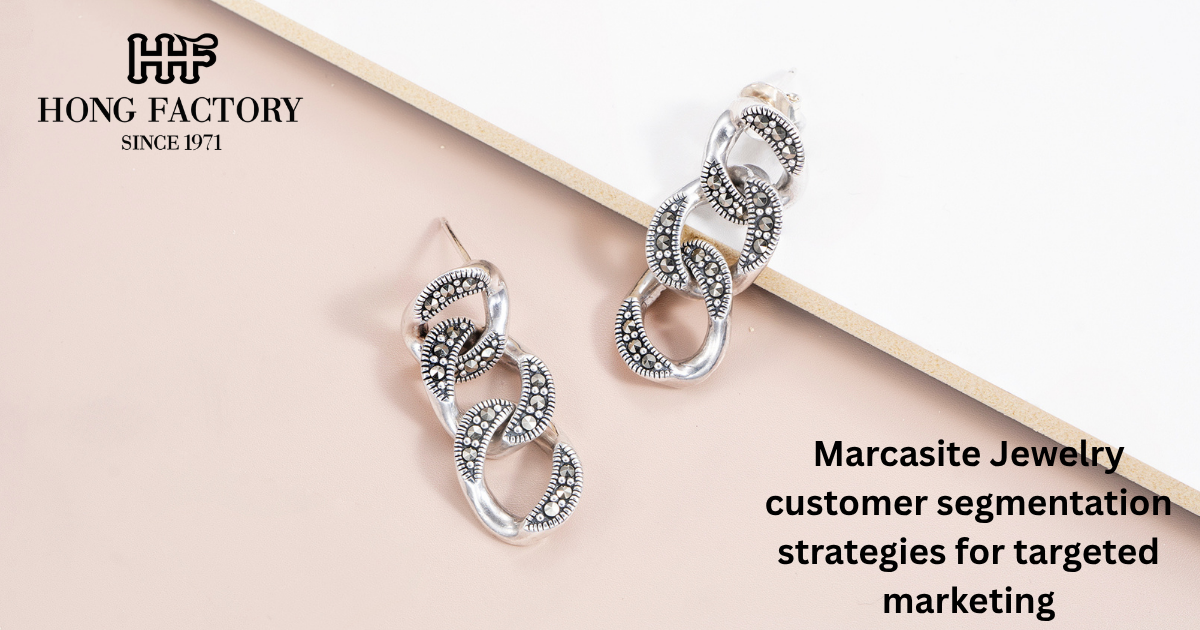
Marcasite Jewelry customer segmentation strategies for targeted marketing and higher conversion efficiency
Why customer segmentation is critical
Not all customers are the same. Treating every buyer identically leads to weak messaging, low engagement, and wasted marketing budget. Customer segmentation allows marcasite jewelry businesses to tailor offers, content, and products to specific groups—resulting in higher conversion rates and better ROI. Marcasite Jewelry customer
Understanding key segmentation types
Segment customers based on:
- Demographics (age, gender, income)
- Behavior (purchase history, browsing activity)
- Psychographics (style preference, lifestyle)
- Geography (local vs international buyers)
Combining multiple factors creates more accurate targeting.
Segmenting by purchase intent
Identify where customers are in the funnel:
- New visitors (awareness stage)
- Interested browsers (consideration stage)
- Ready-to-buy customers (decision stage)
Each group requires different messaging and offers.
Retail vs wholesale segmentation
Separate B2C and B2B audiences:
- Retail buyers focus on design and emotion
- Wholesale buyers focus on price, volume, and reliability
Create different landing pages and communication styles.
Style-based segmentation
Marcasite jewelry fits multiple style niches:
- Vintage lovers
- Gothic fashion audience
- Minimalist buyers
- Bridal customers
Tailor collections and content for each group.
Value-based customer segmentation
Group customers by value:
- High-value repeat buyers
- Occasional buyers
- Price-sensitive customers
Offer VIP perks or loyalty programs for top segments.
Behavioral segmentation for personalization
Use customer behavior data:
- Products viewed
- Items added to cart
- Purchase frequency
Personalized recommendations increase conversion and AOV.
Email segmentation for better performance
Divide email lists:
- New subscribers
- Active customers
- Inactive users
Send targeted campaigns to improve open and click rates.
Ad targeting using segmentation
Improve ad performance:
- Retarget website visitors
- Create lookalike audiences
- Run niche-specific campaigns
Precise targeting reduces cost and increases ROI.
Website personalization strategies
Customize user experience:
- Show relevant products
- Display recently viewed items
- Recommend matching pieces
Personalization increases engagement and sales.
Content strategy for different segments
Create tailored content:
- Styling guides for fashion audiences
- Wholesale guides for B2B buyers
- Gift ideas for seasonal shoppers
Segmented content improves relevance.
Pricing and offer customization
Adjust offers based on segments:
- Discounts for price-sensitive users
- Premium offers for high-value customers
Targeted pricing maximizes revenue.
Tracking and analyzing segment performance
Monitor results:
- Conversion rates by segment
- Customer lifetime value (CLV)
- Engagement metrics
Use data to refine segmentation.
Avoiding common segmentation mistakes
- Over-segmentation (too complex)
- Ignoring data insights
- Using outdated customer data
Keep segmentation actionable and updated.
SEO strategy for segmentation content
Target keywords such as “customer segmentation,” “targeted marketing,” and “marcasite jewelry marketing.” This attracts business users.
Internal linking for marketing ecosystem
Link this article to email marketing, CRO, and content marketing topics to strengthen SEO structure.
Content structure for readability
Use H1, H2, H3 headings with bullet points for clarity and easy scanning.
Expanding keyword variations naturally
Include terms such as “audience targeting,” “customer analysis,” and “marketing segmentation” to enhance SEO.
Conclusion
Marcasite jewelry customer segmentation is essential for targeted marketing and higher conversion efficiency. By understanding your audience and tailoring strategies accordingly, you can maximize results and build stronger customer relationships.
For SEO and PBN strategies, segmentation-focused content attracts high-value users and supports long-term growth.