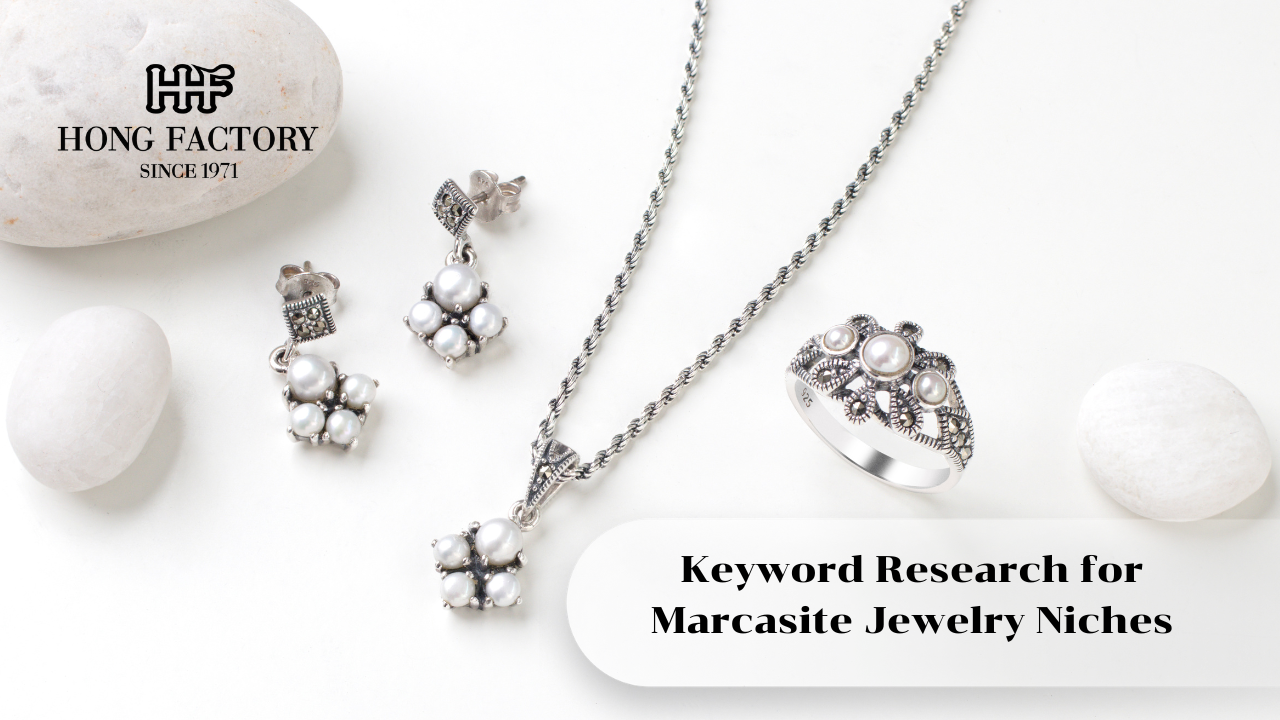
Keyword research is the backbone of effective SEO for marcasite jewelry websites. Because the marcasite niche combines craftsmanship, vintage aesthetics, silver materials, and both B2C and B2B intent, keyword strategy must be precise, structured, and aligned with real buyer behavior. Well-executed keyword research for marcasite jewelry niches helps brands attract qualified traffic, reduce competition, and convert visitors into customers or wholesale leads.
This article explains how to research, structure, and prioritize keywords specifically for marcasite jewelry brands, manufacturers, and exporters. sterling silver meaning
Why Keyword Research Matters in the Marcasite Niche

Keywords determine visibility.
Challenges in the Marcasite Keyword Landscape
Marcasite jewelry SEO often faces:
- Low general search volume but high intent
- Overlap between informational and commercial queries
- Competition from generic silver jewelry terms
- Mixed retail and wholesale intent
Targeted keyword research solves these challenges.
Understanding Search Intent in Marcasite Jewelry
Intent shapes keyword value.
Main Keyword Intent Categories
- Informational: history, care, materials, styling
- Commercial: best marcasite jewelry, price, quality
- Transactional: buy marcasite rings, silver marcasite earrings
- B2B / Wholesale: marcasite jewelry manufacturer, wholesale supplier
Separating intent prevents content cannibalization.
Building a Core Keyword Seed List
Everything starts with seed keywords.
Core Seed Keyword Examples
- marcasite jewelry
- marcasite silver jewelry
- marcasite ring
- marcasite earrings
- marcasite jewelry wholesale
Seed keywords provide the foundation for expansion.
Expanding Keywords with Modifiers
Modifiers reveal buyer intent.
High-Value Modifier Types
- Product type (ring, necklace, brooch)
- Material (sterling silver, 925 silver)
- Style (vintage, antique, Art Deco)
- Intent (buy, wholesale, manufacturer)
- Geography (USA, UK, Europe)
Combining modifiers creates long-tail opportunities.
Long-Tail Keywords for Lower Competition
Long-tail keywords convert better.
Benefits of Long-Tail Targeting
- Lower SEO competition
- Clearer search intent
- Higher conversion rates
Examples include “handcrafted marcasite silver ring” or “marcasite jewelry wholesale supplier.”
Keyword Research for Product Pages
Product pages require precision.
Product Keyword Strategy
- One primary keyword per product
- Secondary keywords for variations
- Avoid duplicate keyword targeting
Clear targeting improves ranking and relevance.
Keyword Strategy for Category Pages
Categories capture high-intent traffic.
Category Keyword Structure
- Primary category keyword
- Supporting subcategory terms
- Informational internal links
Strong category keywords act as SEO landing pages.
Informational Keywords for Authority Content
Education builds trust.
Informational Keyword Examples
- how to care for marcasite jewelry
- what is marcasite stone
- marcasite jewelry history
Informational content supports E-E-A-T signals.
Commercial Keywords for Buyer Conversion
Commercial intent drives revenue.
Commercial Keyword Examples
- best marcasite jewelry brands
- marcasite jewelry price guide
- marcasite silver jewelry reviews
These keywords support comparison-stage buyers.
B2B and Wholesale Keyword Research
Wholesale keywords differ significantly.
B2B Keyword Characteristics
- Lower volume but higher value
- Longer phrases
- Business-focused language
Examples include “marcasite jewelry manufacturer Thailand” or “marcasite jewelry wholesale factory.”
Analyzing Keyword Difficulty and Competition
Not all keywords are worth targeting.
Evaluation Criteria
- Search volume trends
- Keyword difficulty
- Competitor authority
- Content quality ranking on page one
Strategic selection saves time and resources.
Mapping Keywords to Content Structure

Structure prevents overlap.
Keyword Mapping Best Practices
- One primary keyword per page
- Clear supporting keywords
- Logical internal linking
Mapping avoids cannibalization issues.
Using Competitor Analysis in Keyword Research
Competitors reveal opportunity gaps.
Competitor Research Techniques
- Analyze ranking keywords of top competitors
- Identify underserved content topics
- Evaluate content depth and format
Gaps represent quick wins.
Keyword Research Tools and Data Sources
Tools improve accuracy.
Commonly Used Tools
- Google Search Console
- Keyword research platforms
- Search result analysis
Use multiple sources for validation.
Seasonal and Trend-Based Keywords
Timing matters.
Seasonal Keyword Opportunities
- Holiday-related searches
- Gift-focused queries
- Fashion trend cycles
Seasonal planning boosts timely traffic.
Keyword Clustering for Content Strategy
Clusters support scalability.
Keyword Cluster Structure
- One pillar keyword
- Multiple supporting long-tail keywords
Clusters improve topical authority.
Monitoring Keyword Performance
Keywords evolve.
Performance Tracking Metrics
- Ranking changes
- Click-through rate
- Conversion performance
Regular review enables optimization.
Avoiding Common Keyword Research Mistakes
Errors reduce effectiveness.
Mistakes to Avoid
- Targeting overly broad keywords
- Ignoring intent
- Overloading pages with keywords
Precision outperforms volume.
Aligning Keyword Strategy with Business Goals
SEO should support revenue.
Strategic Alignment
- Retail vs wholesale priorities
- Branding vs conversion focus
- Local vs international growth
Alignment ensures ROI.
Long-Term Keyword Strategy for Marcasite Jewelry
Keyword research is ongoing.
Long-Term Focus
- Continuous keyword expansion
- Refreshing existing content
- Adapting to market changes
Consistency builds authority.
Conclusion
Keyword research for marcasite jewelry niches requires a strategic balance between intent, competition, and business goals. By building structured keyword lists, targeting long-tail opportunities, separating retail and wholesale intent, and mapping keywords carefully to content, marcasite jewelry brands can achieve sustainable SEO growth. In a niche driven by trust and craftsmanship, the right keywords connect the right audience to the right message—at the right time.