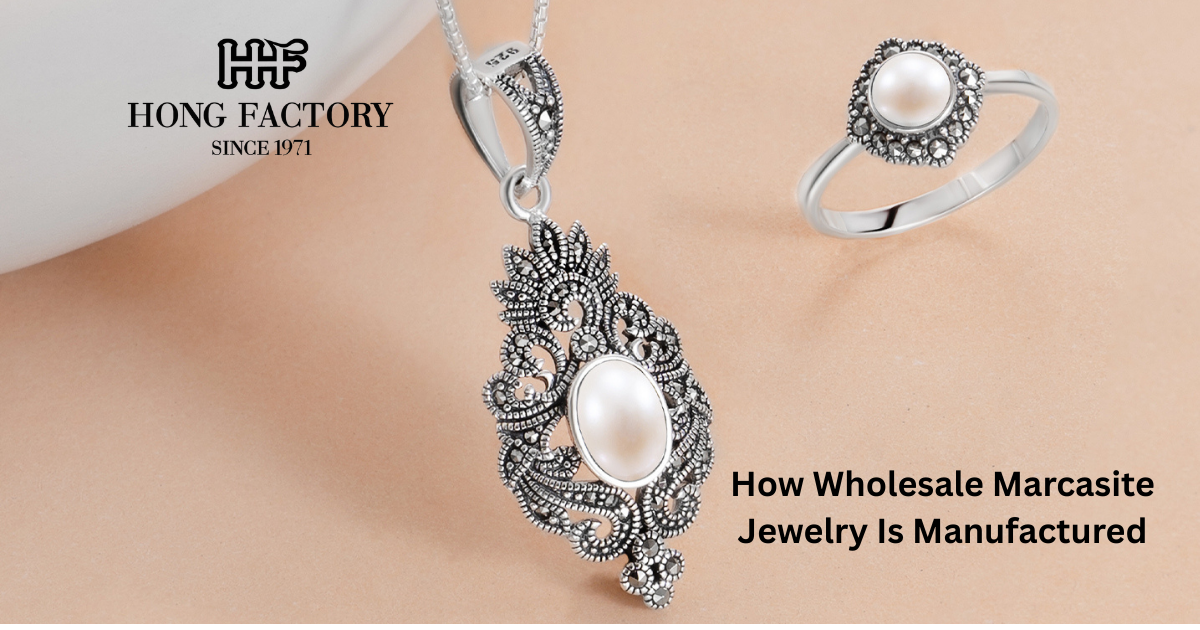
Wholesale marcasite jewelry is admired around the world for its vintage elegance, intricate patterns, and subtle metallic sparkle. While customers often focus on the beauty of the finished jewelry, the manufacturing process behind these pieces is complex and requires skilled craftsmanship. From design development to stone setting and polishing, each stage of production plays an important role in creating high-quality marcasite jewelry.
For jewelry retailers and buyers, understanding how wholesale marcasite jewelry is manufactured can provide valuable insight into the craftsmanship and value of these products. It also helps businesses choose reliable suppliers who maintain professional production standards.
This article explores the key steps involved in the manufacturing process of wholesale marcasite jewelry.
Jewelry Design and Concept Development
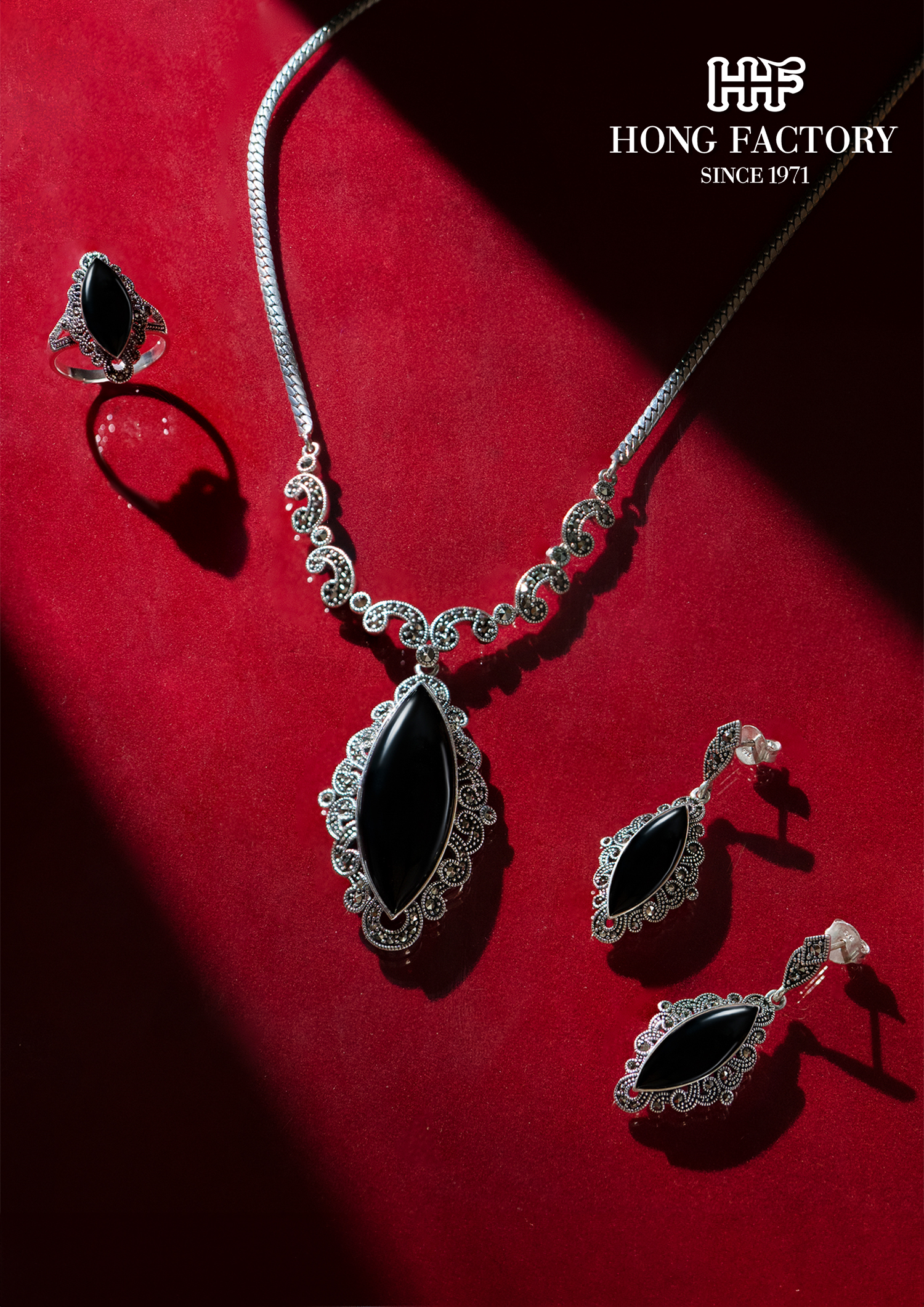
The manufacturing process begins with jewelry design. Designers create concepts that define the shape, structure, and decorative details of the jewelry piece. These designs may be inspired by vintage styles, modern fashion trends, or classic European aesthetics.
In many jewelry factories, designers first sketch ideas by hand. These sketches show the placement of marcasite stones, the structure of the sterling silver base, and the overall shape of the jewelry.
Today, many manufacturers also use computer-aided design (CAD) software to develop digital jewelry models. CAD technology allows designers to visualize the jewelry in three dimensions and make adjustments before production begins.
Once the design is finalized, the next step is creating a prototype.
Creating the Jewelry Mold
After the design stage, a master model is produced. This model represents the exact structure of the final jewelry piece. Traditionally, master models were carved by hand from wax or metal, but modern factories often use 3D printing technology to produce highly accurate models.
The master model is used to create a mold that will be used for casting multiple jewelry pieces. The mold ensures that each item produced in the factory maintains consistent shape and dimensions.
This step is important because wholesale jewelry manufacturing requires producing many identical pieces while maintaining quality and precision.
Sterling Silver Casting Process
Most wholesale marcasite jewelry is made using 925 sterling silver. Sterling silver is an alloy composed of 92.5 percent pure silver and a small amount of other metals, usually copper. This combination improves durability while maintaining the bright appearance of silver.
During the casting process, molten sterling silver is poured into molds to form the base structure of the jewelry piece. Once the metal cools and solidifies, the raw silver jewelry component is removed from the mold.
At this stage, the jewelry piece has its basic shape but still requires additional finishing and decoration before becoming a complete product.
Cleaning and Pre-Finishing the Silver
After casting, the jewelry pieces go through a cleaning and pre-finishing process. Workers remove excess metal and smooth out rough edges created during casting.
Special tools are used to refine the structure of the jewelry and prepare it for stone setting. The silver surface may also be lightly polished to remove imperfections.
This stage ensures that the base metal is clean and ready for the next step, which is one of the most important processes in marcasite jewelry manufacturing.
Setting the Marcasite Stones
Stone setting is the most delicate and labor-intensive part of producing wholesale marcasite jewelry. Marcasite stones are typically very small, which means they must be placed carefully into the silver surface.
Skilled artisans use specialized tools to place each stone individually into small grooves or settings in the metal. The stones are then secured by pressing tiny metal edges around them.
Because each stone must be positioned precisely, this process requires patience and technical expertise. Experienced craftsmen can set hundreds of stones while maintaining consistent alignment and symmetry.
The careful arrangement of these stones is what creates the distinctive sparkle associated with marcasite jewelry.
Polishing and Surface Finishing
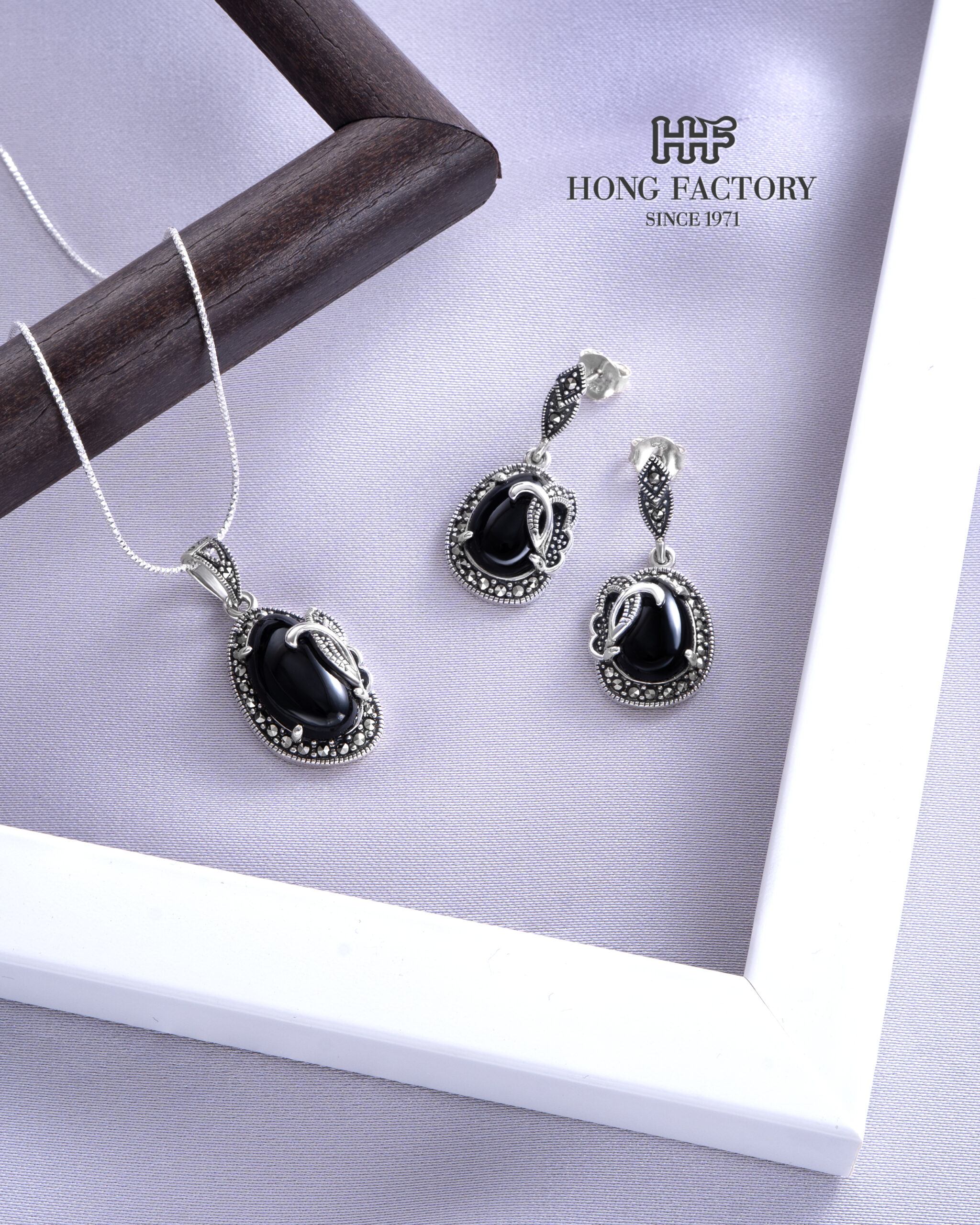
After the stones are securely placed, the jewelry undergoes a polishing process. Polishing enhances the shine of the sterling silver and removes any marks created during manufacturing.
Jewelry pieces may go through several polishing stages using different polishing tools and compounds. This process creates a smooth and reflective metal surface.
Some manufacturers also apply oxidized finishes to certain areas of the jewelry. Oxidation darkens parts of the silver surface, creating contrast that highlights the marcasite stones and decorative patterns.
This finishing technique is often used in vintage-inspired jewelry designs.
Quality Control Inspection
Before jewelry pieces are packaged and shipped, they go through a quality control inspection. Inspectors carefully examine each piece to ensure that it meets production standards.
During inspection, workers check that the stones are securely set and evenly aligned. They also inspect the silver surface to ensure there are no scratches, dents, or imperfections.
Jewelry that does not meet quality standards may be returned for additional finishing or repairs. Maintaining strict quality control helps manufacturers ensure that retailers receive reliable products.
Packaging and Distribution
Once the jewelry passes inspection, it is prepared for packaging and shipment. Wholesale manufacturers often package jewelry carefully to prevent damage during transportation.
The products are then shipped to distributors, retailers, or international buyers. Many manufacturers export wholesale marcasite jewelry to markets around the world.
Countries such as Thailand have developed strong export systems for jewelry manufacturing, allowing businesses to distribute products efficiently across global markets.
The Importance of Skilled Craftsmanship
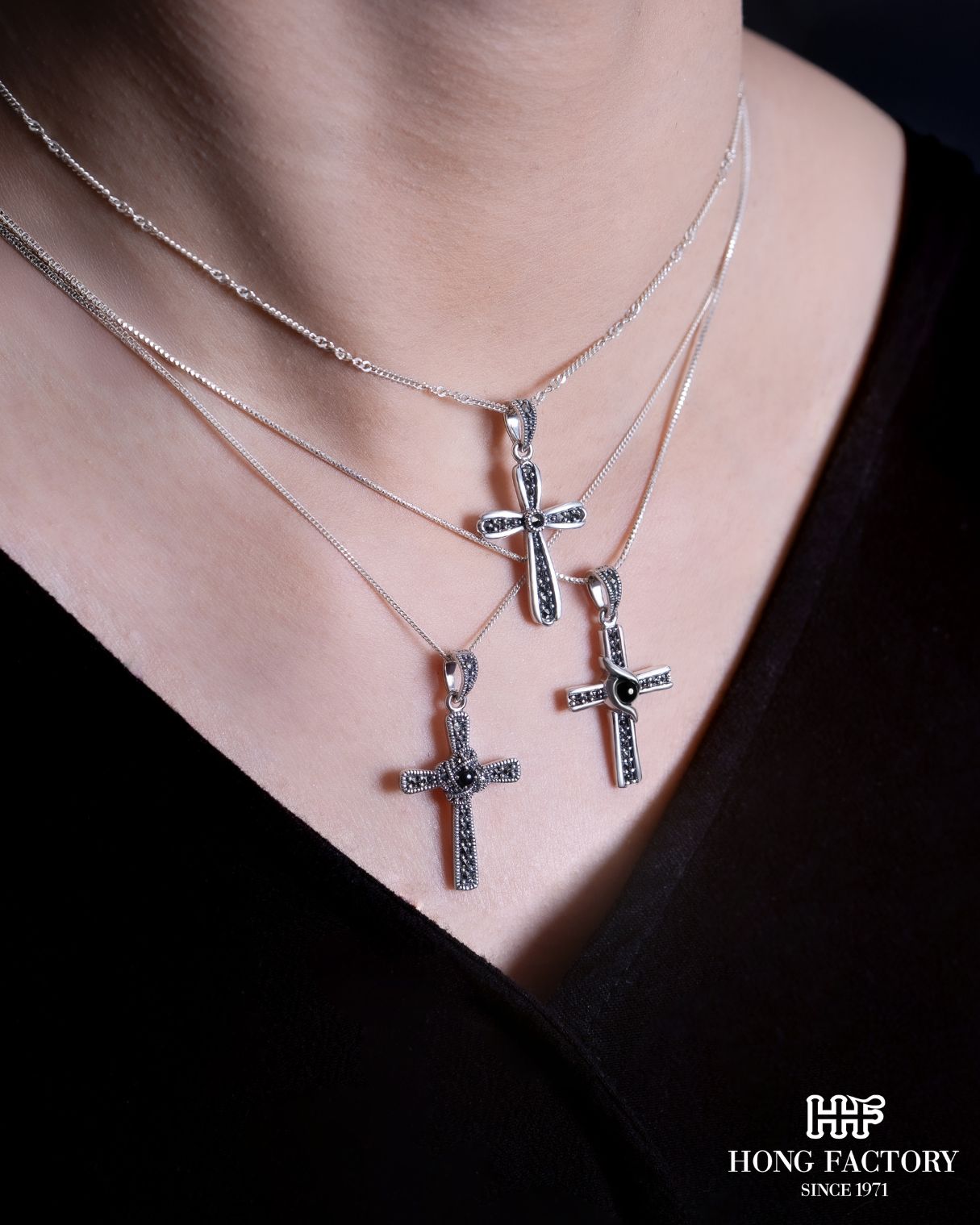
Although modern technology supports many parts of jewelry production, skilled craftsmanship remains essential in marcasite jewelry manufacturing. The delicate process of setting small stones and refining silver surfaces requires human expertise.
Factories that employ experienced artisans are often able to produce higher quality jewelry with more intricate designs. Retailers who work with these manufacturers benefit from products that meet customer expectations for durability and beauty.
Because of this craftsmanship, marcasite jewelry continues to maintain its reputation as a refined and artistic jewelry style.
Conclusion
The manufacturing process of wholesale marcasite jewelry involves many detailed steps, from design and casting to stone setting and polishing. Each stage contributes to the creation of jewelry pieces that combine elegance, durability, and artistic craftsmanship.
For retailers and buyers, understanding this production process highlights the value of working with experienced manufacturers who maintain high standards of quality and craftsmanship.
As the demand for vintage-inspired jewelry continues to grow, wholesale marcasite jewelry manufacturing will remain an important part of the global jewe